Start with the current California standard
Select the grade, subject, and published California standard connected to the lesson. The standard provides the target; the evidence helps identify the response.
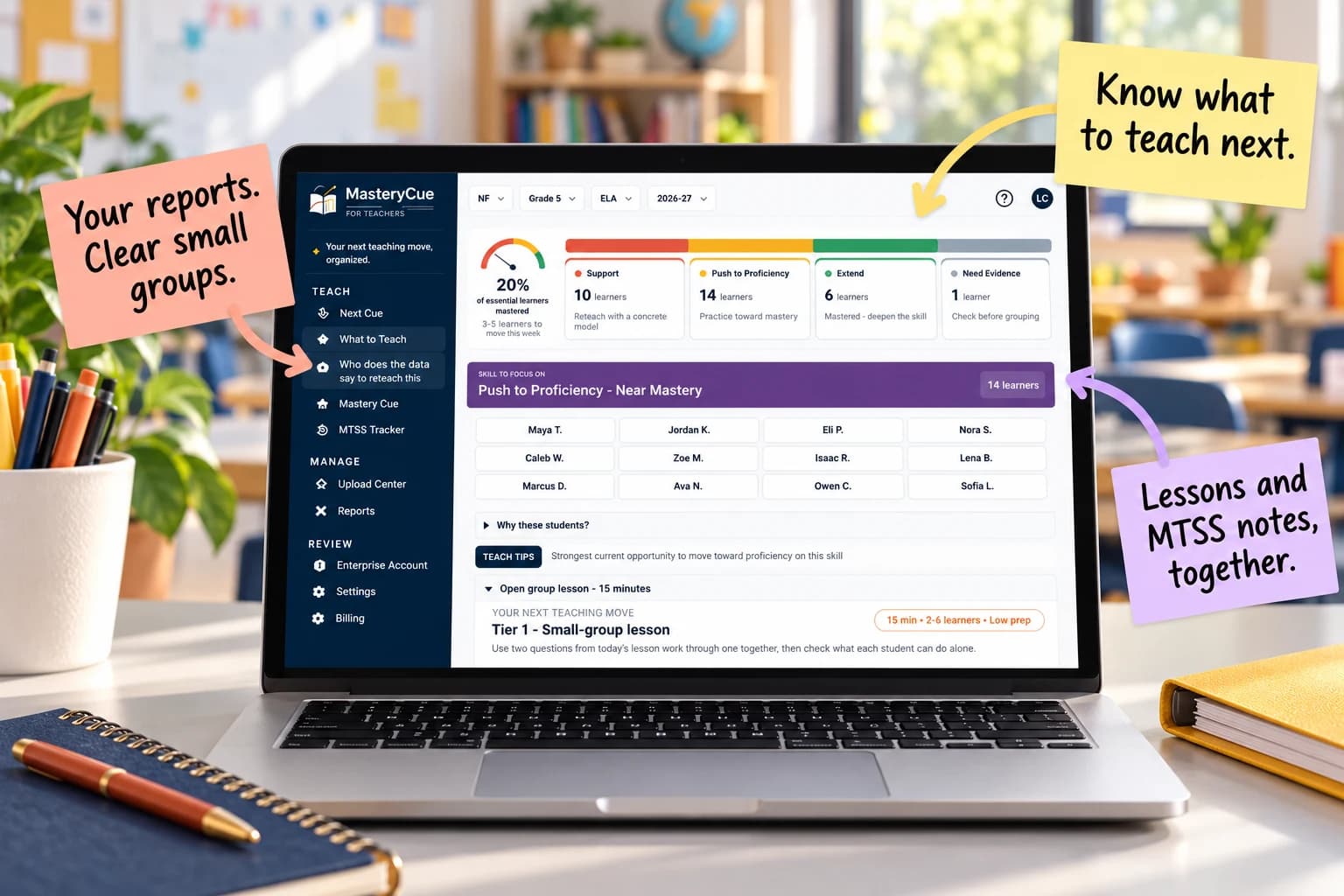
Plan flexible small groups around the California standard and skill students are learning now, using current evidence to decide who needs support, targeted practice, verification, or extension.
14 days free. Continue for $12.99/month or $99/year only if you choose to upgrade.
USE THE REPORTS YOU ALREADY HAVE
Use supported IXL Score Grid, MAP Growth, aimswebPlus, and classroom assessment exports alongside rosters and curriculum maps. Review learner matches and available evidence before using a suggested group or teaching plan. Accepted formats vary by report.
Selected CSV or Excel layouts for Star Reading & Math, i-Ready Diagnostic, and mCLASS / DIBELS can provide screening, domain, placement, or benchmark context. Format coverage and the full upload-to-recommendation workflow are still being verified.
These are file imports, not direct vendor connections. Diagnostic scores do not establish mastery of an individual standard or automatically place students in an intervention.
Select the grade, subject, and published California standard connected to the lesson. The standard provides the target; the evidence helps identify the response.
Use assessment and classroom evidence that is appropriately aligned to the selected skill. When evidence is broad or conflicting, collect a more specific check before making a sustained placement decision.
Give each small group a defined teacher action, student task, and success check rather than a permanent ability label.
After instruction, use a short aligned check to decide whether students need continued support, core instruction, extension, or another verification.
Stop rebuilding groups and teaching plans from scattered reports. Review the evidence, choose a focused teaching move, and keep a record of the support you provide.
Use assessment results, classroom evidence, curriculum pacing, standards, and the class context you already work with.
Identify the skill and students that need attention now instead of stopping at a score report.
Choose support, targeted instruction, extension, or another evidence check—and verify what changed.
Explore practical guides for grouping, assessment analysis, and next-step planning.
California is included in MasteryCue's launch-state standards coverage for supported K–12 subjects.
Use the current standard or skill as the target, review aligned evidence, group students by the instructional response they need, and regroup as evidence changes.
No. The grouping model is designed to be flexible and responsive to current evidence.